Which hours are the cheapest? How to save with timers, Nord Pool data, and Smart Kilowatts
As electricity prices rise, the cheapest hours can help reduce the bill without a large investment. We show how to use historical Nord Pool data, mechanical timers, and when it is worth moving to dynamic Smart Kilowatts control.
Electricity prices in everyday life increasingly seem to move in only one direction: up. There are several ways to save: use less electricity, replace appliances with more efficient ones, install solar panels, or add a home battery. These are good solutions, but they often require a larger upfront investment even when support such as APVA support for solar power plants is available.
In this article we discuss a simpler path that, in our view, is talked about too little: not only how much electricity we use, but also when we use it.
What is Nord Pool and why does its price change?
Nord Pool is an electricity exchange where electricity is bought and sold for different European price zones. For a regular consumer, the most important part is the so-called day-ahead price: today, electricity prices for tomorrow are published, so you can see in advance which intervals will be cheaper and which will be more expensive.
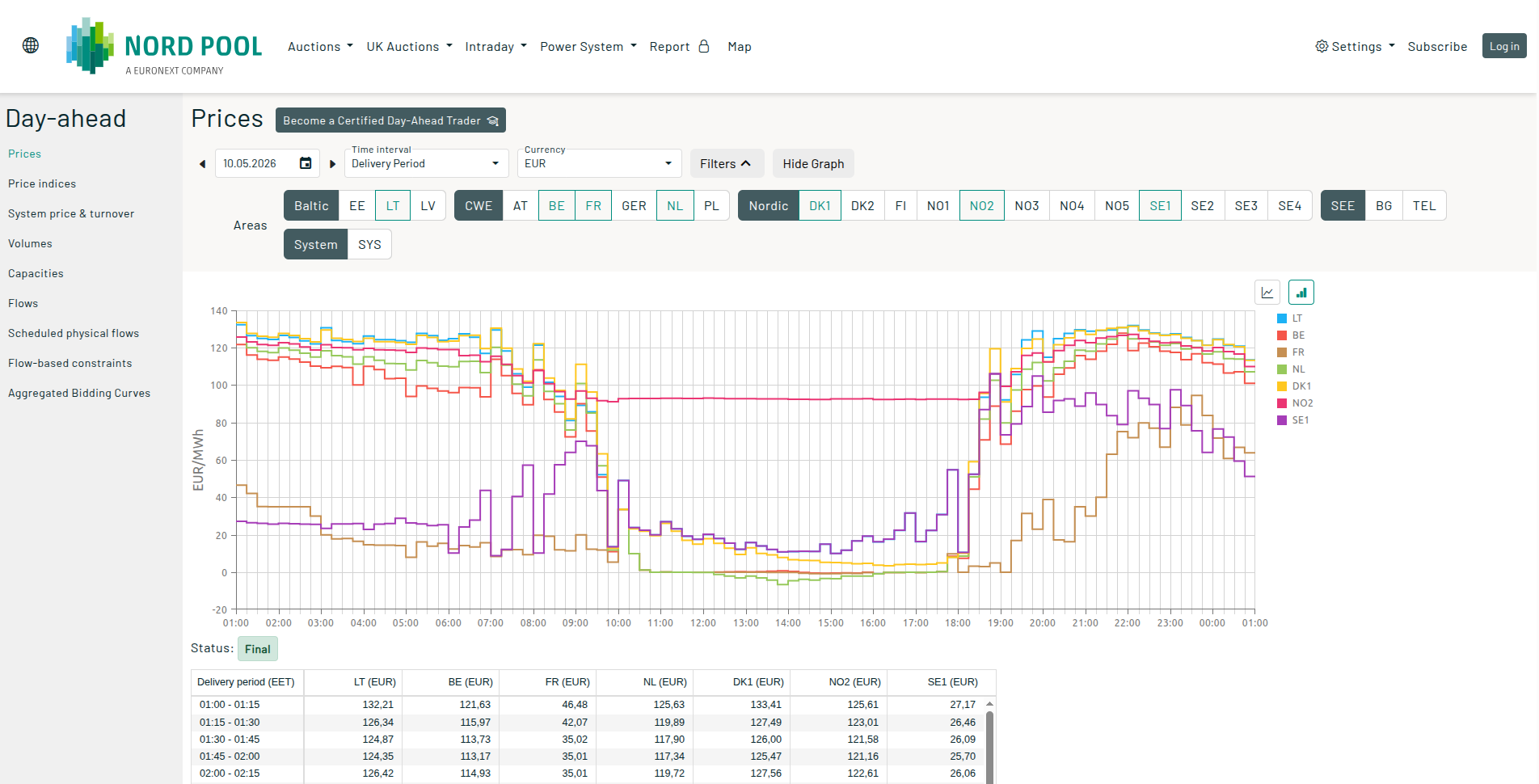
It is important to understand that Nord Pool itself does not supply electricity to your home. You still buy electricity from your chosen supplier, but the supplier may offer a plan where the price is linked to the Nord Pool exchange price. These plans are often called exchange, variable, dynamic, or spot-price plans.
In Lithuania, such plans are already realistically available to household consumers. For example, the Ignitis “Išmanus – 15” plan states that the electricity price changes every 15 minutes according to the Nord Pool exchange, while Enefit’s variable exchange-price plan is based on the Lithuanian Nord Pool price zone and allows consumption to be planned according to prices known in advance.
Similar plans based on the Nord Pool exchange price are also relevant in other Nordic and Baltic countries. First of all, this means Lithuania, Latvia, Estonia, Finland, Sweden, Norway, and Denmark. In these countries, the Nord Pool price is a normal electricity-market reference, and consumers can often choose plans where the electricity price is directly or very closely linked to the exchange price.
Nord Pool also operates in the wider European market, but not all countries offer consumer plans that are practically referred to as “Nord Pool” plans. For example, in Germany, France, or the Netherlands, dynamic tariffs may be linked to other exchanges or market data sources. Therefore, this article mainly relies on the Lithuanian situation and on countries where consumer plans based on Nord Pool are a clearly understood and practically applicable topic.
The difference matters: a fixed plan provides more stability because the price per kWh remains the same for a longer period. A dynamic or exchange-based plan provides more opportunities to save, but requires flexibility. Larger loads such as EV charging, a water heater, heat pump, pool pump, or dehumidifier are worth moving to cheaper intervals.
Do you need a smart electricity meter for this?
Yes, to actually be billed according to a dynamic exchange price, you usually need a smart electricity meter. The reason is simple: the supplier must know exactly how much electricity you used in a specific hour or 15-minute interval. Without that metering, the supplier cannot correctly apply different prices to different time intervals.
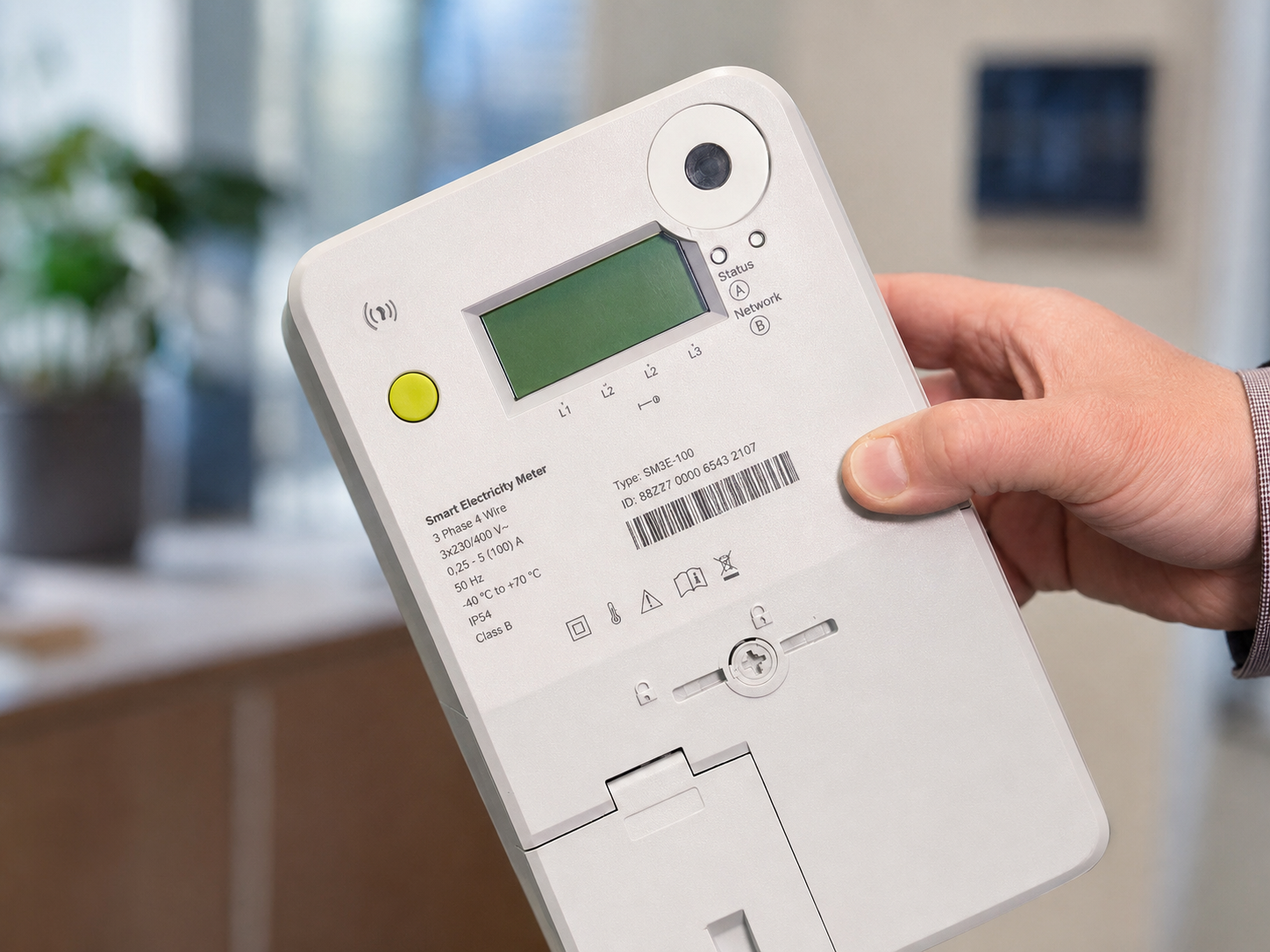
In Lithuania this is becoming increasingly important because new exchange-based plans are moving to 15-minute pricing. For example, Ignitis states that in the “Išmanus – 15” plan the price changes every 15 minutes, and consumption is also metered in 15-minute intervals. Enefit recommends its exchange-price plan for consumers who have, or will have, automated metering, meaning a smart meter.
In Germany this condition is also very important. Since 2025, electricity suppliers in Germany must offer dynamic tariffs to consumers with smart meters, and the country’s economics ministry also emphasizes that dynamic and variable tariffs allow consumers to adapt consumption to price signals.
Therefore, before switching to a Nord Pool or other exchange-based plan, it is worth checking three things: whether your property already has a smart meter, whether your supplier offers a dynamic plan at your address, and which additional components are added to the exchange price: supplier margin, network fee, state-regulated components, VAT, and other charges.
Why do not all devices need to run all the time?
Some home devices do not need to be on 24 hours per day. If, for example, pool water needs 12-14 hours of filtering per day, why should the pump run continuously? If a plug-in hybrid is connected to the charger for 12 hours but actually needs 9 hours of charging, why not choose exactly the cheapest 9 hours instead of simply the first 9 hours in a row? Will you really notice worse air quality if the recuperator is turned off during the single most expensive hour of the day?
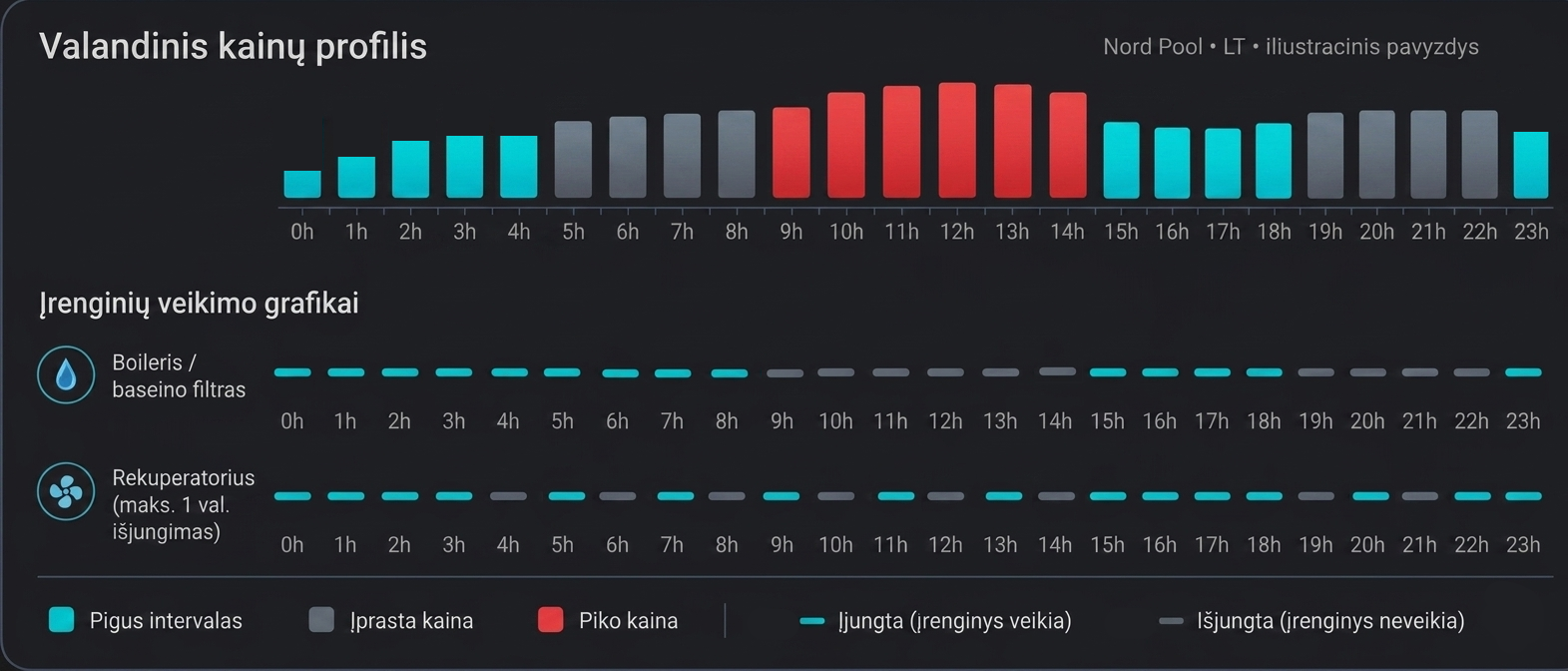
A similar logic can work for a water heater, ventilation, dehumidifier, air conditioner, water treatment, or aeration equipment. The key point is that the appliance must be safe to switch, and interruptions must not violate hygiene, comfort, manufacturer instructions, or safety limits.
How do you find those hours?
If we want to save with a simple mechanical or electronic timer, we need to know not only tomorrow’s price, but also the general rule: during which hours electricity is most often cheapest. Nord Pool publishes prices in advance only for the next day, so in theory you could check tomorrow’s prices every evening and reset the timer. In practice, this saving method quickly becomes inconvenient because most people do not want to manually change timer settings every day.
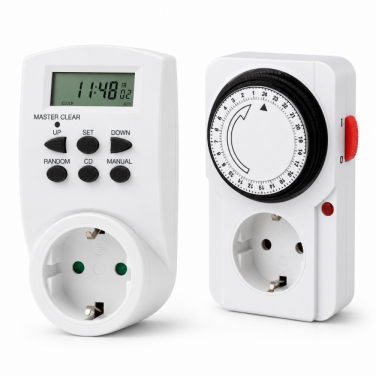
This is where historical Nord Pool data helps. As in many data-analysis tasks, we can try to judge the future by what repeated in the past. It is not a guarantee, but it lets us find clear patterns: which hours were usually cheap, when electricity usually became more expensive, whether summer and winter schedules differ, and whether one timer schedule is enough for the whole year.
Smart Kilowatts Best Time Search makes this analysis simpler: choose the country, how many hours per day the device must run, whether the hours may be split, and get a practical timer schedule based on historical Nord Pool data.
For example, let us try to find the cheapest six hours using historical data from the last three years:
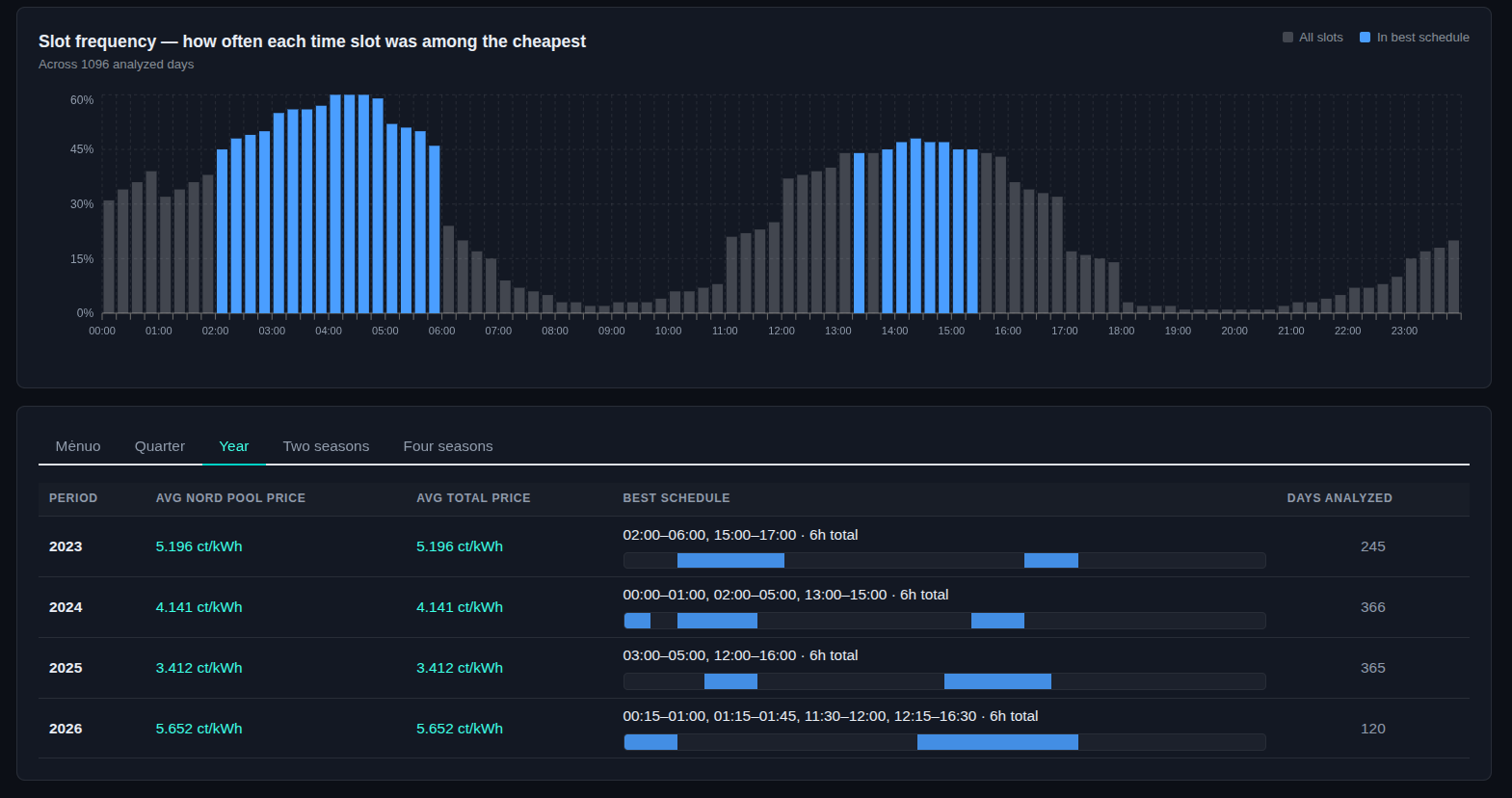
As we can see from the image above, the cheapest hours during the year are not distributed evenly. Most often they occur at night, closer to morning (roughly until 06:00), and between 13:00 and 16:00. But we still need to account for the fact that your tariff may adjust this price unevenly, so the cheapest Nord Pool hour is not necessarily the cheapest hour for you in practice.
Let us take one typical tariff where 13.5 ct/kWh is added during the day and 8.6 ct/kWh is added at night to the Nord Pool price, plus VAT:
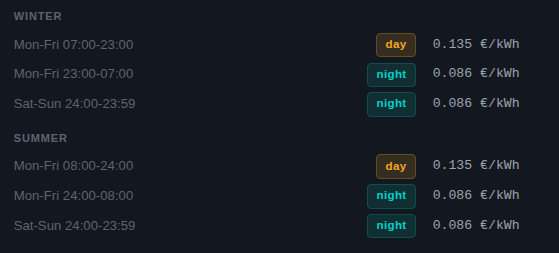
Then the situation changes completely:
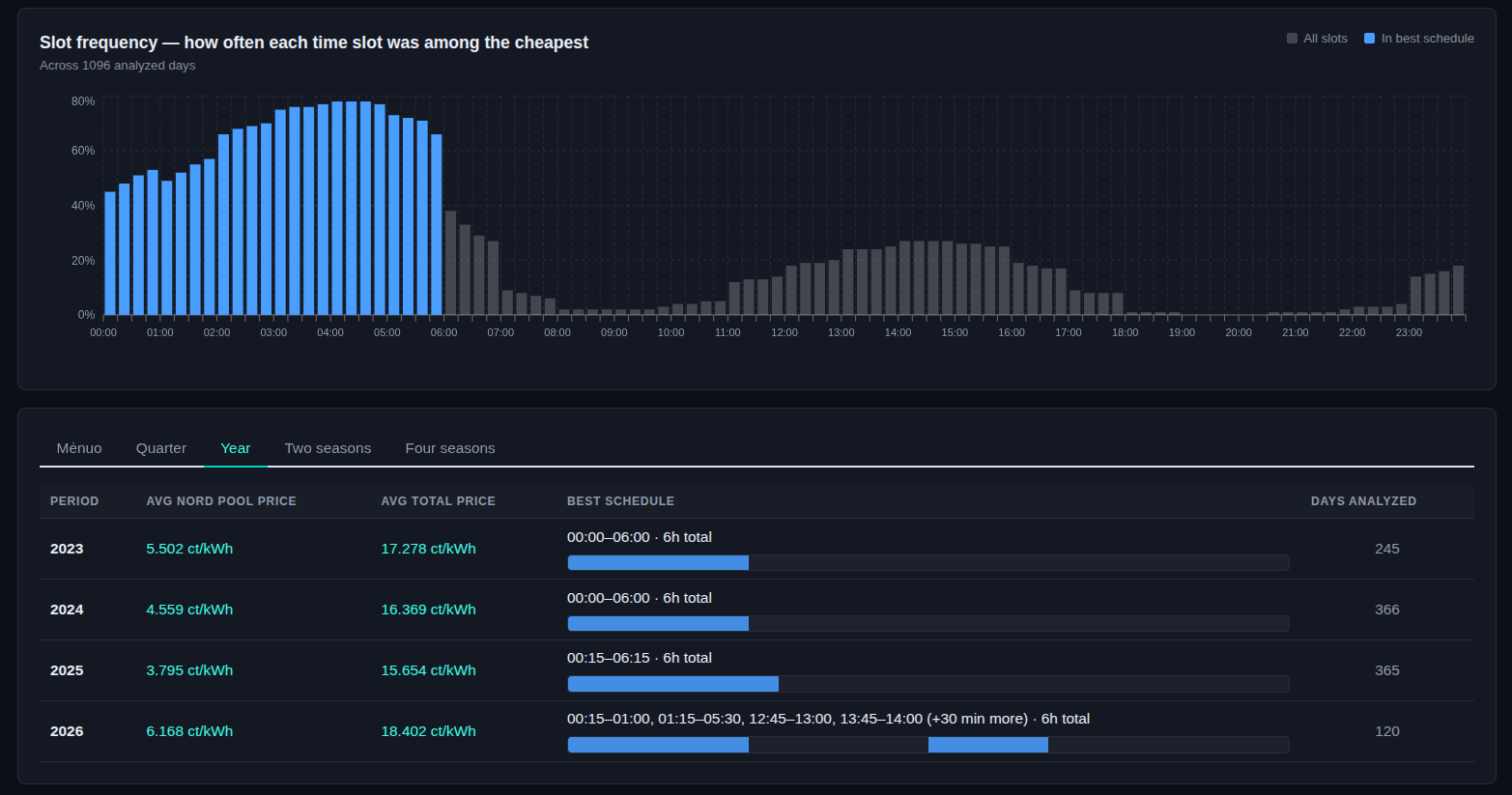
So, after applying the tariff, we can see that all the “cheap” hours have shifted to the left. This happened because Lithuanian suppliers usually apply a lower markup at night and a higher markup during the day. As we can see, the situation depends very little on the year and is more or less the same every year. The fact that cheap times also appear during the day in 2026 may be influenced by the fact that only 120 days out of 365 had passed when the calculation was made. We can also estimate what our final electricity price would be when consuming during the very cheapest hours: about 15-18 ct/kWh, including VAT. This does not mean that setting a timer to power the device exactly during these hours will always give our absolute lowest price. These numbers are probably better understood as a floor below which the price can no longer be reduced using only a simple timer from a hardware store.
Is it worth changing the timer by season?
Let us also check whether we could expect even lower prices by changing the timer settings two or four times per year. To do that, we examine historical price distributions depending on seasonality:

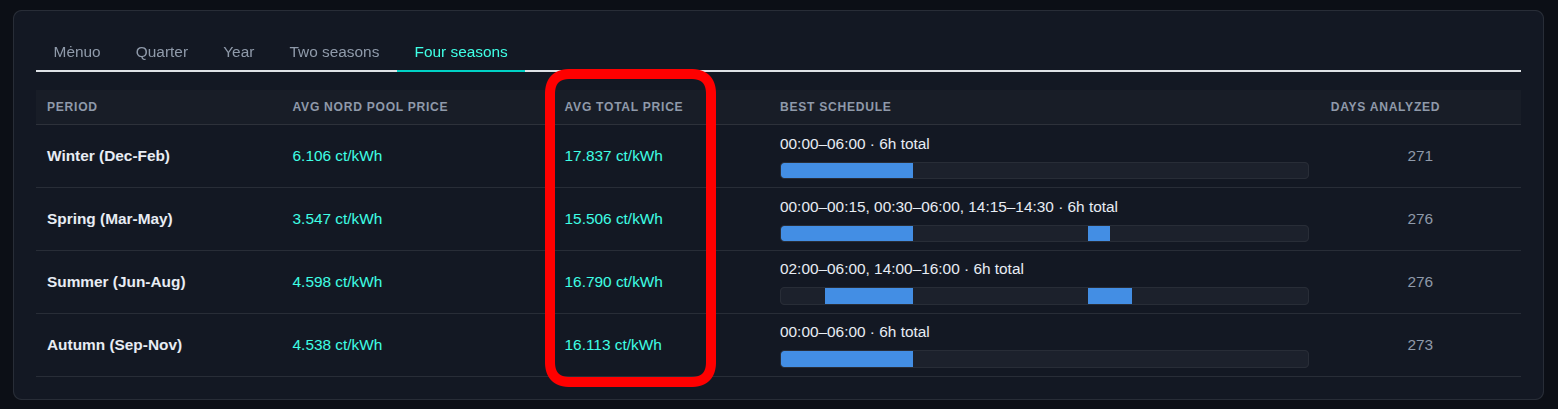
As we can see, if we change the timer once per year and allow the device to run from 00:00 to 06:00 during the cold season (October-March), and from 01:00 to 06:00 plus 14:00 to 15:00 during the warm season (April-September), we can expect an electricity price that is another 1-2 cents per kilowatt-hour lower than setting the timer only once for the whole year.
You can try our cheapest-times search tool yourself here: Best Time Search Tool
Important limitations
These calculations are based on past prices. Future Nord Pool prices may behave differently, so a historical cheapest-hours schedule is an estimate, not a guarantee. You must also consider the appliance manual, safety, hygiene, comfort, wiring, relay, or plug power rating.
If you want to start minimally, choose one safe appliance, calculate the cheapest hours, and try a mechanical timer. If you want more accurate control without manual seasonal switching, move to automatic control based on tomorrow’s prices.
Conclusions
A cheap mechanical timer relies on a recurring historical schedule. It is a good start because the investment is small and savings can begin almost immediately, even if you have not yet switched to a dynamic tariff. Our Best Time Search Tool can help you improve the return.
However, it is always important to remember that a mechanical timer does not know tomorrow’s prices, weekends, unusual price spikes, or the real state of your device. If you already have a smart meter and a dynamic plan, automatic control becomes much more useful because it can react every day to real tomorrow prices, not just to a historical average.
The Smart Kilowatts solution uses day-ahead prices and can choose the cheapest hours every day according to a rule. That makes it especially useful when the device is more expensive, runs for many hours, or has a clear availability window, such as a charging car. Hardware is available on the products page, and subscriptions are on the plans page.
Related setups
-
Open Best Time Search
Try the historical cheapest-hours tool.
-
Open emulator setup
Compare a timer and dynamic scheduling.
-
Products
Smart Kilowatts hardware.
-
Plans
Subscription options.